

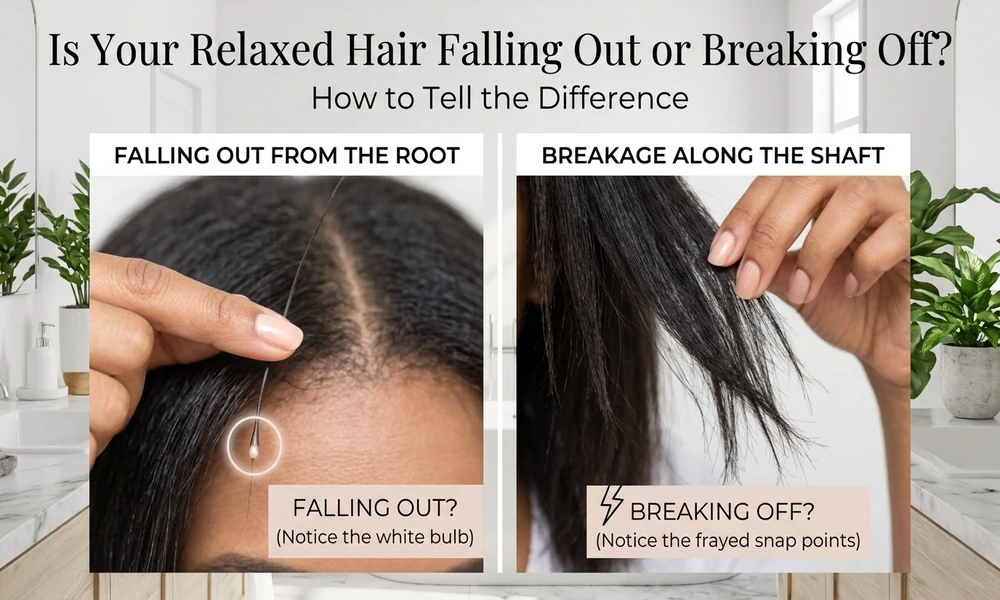
Seeing extra hair in your comb, brush, sink, or shower can feel scary, especially when your hair is relaxed and already needs a little more care. Many women quickly say their relaxed hair is “falling out,” but sometimes the real issue is breakage. The difference matters because shedding and breakage do not always come from the same cause. Shedding usually starts from the scalp, while breakage happens when the strand snaps somewhere along the hair shaft. Once you understand what your hair is showing you, it becomes easier to respond with the right routine, products, styling habits, and professional help when needed.
Start by Looking Closely at the Hair Strand
Textured and natural hair can already be fragile in certain areas, and once it is chemically relaxed, the strands may need even more gentle handling. This is also why protective styling choices, smooth textured weaves, andRelaxed Straight Hair Extensions can be helpful when they are installed with low tension and proper care. Before you panic, pick up a few strands and look at them carefully.
If the strand is long and has a tiny white bulb at one end, it is most likely shedding. That means the hair came out from the root as part of the growth cycle. Some shedding is normal. However, if the hair pieces are short, uneven, and do not have a bulb, that usually points to breakage. Breakage means the strand snapped before it could naturally shed.
Common Signs Your Relaxed Hair Is Breaking Off
Breakage often shows up as short pieces around the sink, on your shirt, or in your hands after styling. Your ends may look uneven, thin, see-through, or rough, even when your scalp still feels full. You may also notice weaker areas around the crown, nape, or edges, especially if those sections receive more heat, friction, brushing, or tension.
Because textured hair has natural curves and bends, it can lose moisture faster, and relaxed strands can become more vulnerable when the hair is over-processed or handled too roughly. LearningHow to Care For Relaxed Hair is important because healthy relaxed hair usually depends on moisture, protein balance, gentle detangling, and careful styling habits.
Some common signs of breakage include:
- Short broken pieces on the counter, floor, or clothing
- Uneven ends that look thin or ragged
- Split ends that travel up the strand
- Hair that feels dry, weak, rough, or brittle
- Edges that look thinner from tight styles or repeated pulling
- Hair that snaps easily when combing or brushing
Breakage can happen when relaxers overlap onto previously treated hair, when touch-ups are done too often, or when heat tools are used without enough protection. It can also come from tight ponytails, heavy extensions, rough towel drying, sleeping without protection, or combing through wet relaxed hair too aggressively.
When It May Be Shedding Instead of Breakage
Shedding is different because the hair releases from the follicle. A shed strand is usually longer and may have a small white bulb at the root end. It may appear during wash day, detangling, or styling. A normal amount of shedding can be part of the hair cycle, so seeing a few long strands does not automatically mean something is wrong.
However, shedding becomes more concerning when it suddenly increases, continues for weeks, or causes visible thinning from the scalp. You may notice more hair on wash day than usual, your part may look wider, or certain areas may seem less dense. Shedding can be influenced by stress, hormonal changes, nutrition, medications, scalp conditions, illness, or postpartum changes, so it is not always caused by styling alone.
If the shedding is sudden, excessive, patchy, or comes with itching, burning, soreness, flakes, redness, or scalp irritation, it is best to speak with a dermatologist or medical professional. A stylist can help with hair-care habits, but a medical provider can help check for scalp or health-related causes that may need treatment.
Practical Care Steps for Healthier Relaxed Hair
The goal is not to treat relaxed hair like it is “bad” or impossible to grow. The goal is to treat it like hair that needs structure, moisture, and patience. Start by spacing out relaxer touch-ups and avoiding overlapping chemicals onto hair that has already been processed. If your ends are damaged, a small trim can prevent splits from traveling higher.
Deep conditioning regularly can help improve softness and manageability, while protein treatments may help strengthen weak strands when used correctly. Too much protein can make hair feel stiff, so balance is important. Use wide-tooth combs, detangle from the ends upward, and be extra gentle when the hair is wet because relaxed strands can stretch and snap more easily.
It also helps to reduce direct heat and choose low-tension styles. Avoid styles that pull tightly at the edges or place too much weight on fragile sections. At night, use a satin or silk scarf, bonnet, or pillowcase to reduce friction. During the day, avoid constantly brushing, touching, or restyling the hair, because repeated manipulation can quietly lead to more breakage over time.
The Bottom Line
Relaxed hair falling out and relaxed hair breaking off can look similar at first, but the clues are usually in the strand. Long hairs with a bulb often point to shedding from the root. Short, uneven pieces usually point to breakage along the shaft. Once you know which one you are dealing with, you can stop guessing and start making better choices for your hair.
If the issue is breakage, focus on moisture, strength, trims, gentle styling, and safer relaxer habits. If the issue is heavy shedding, pay attention to your scalp, your overall health, and any sudden changes in your body or routine. With patience, a softer approach, and the right support when needed, relaxed hair can look polished, feel stronger, and remain healthy over time.
