

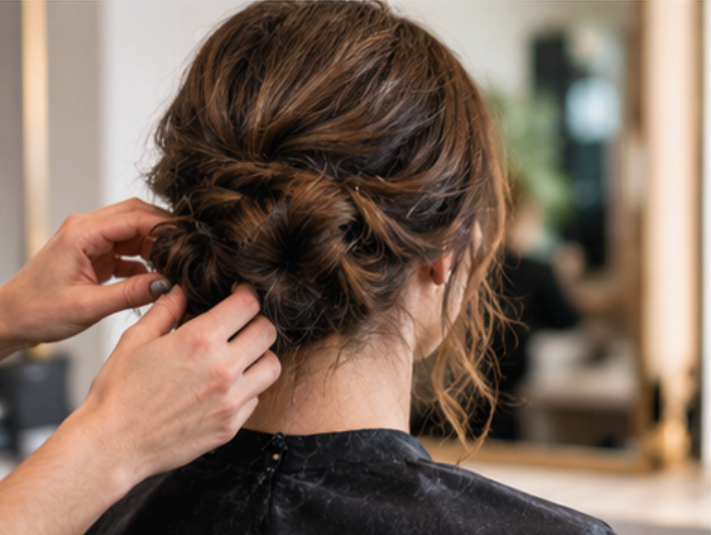
Some hairstyles become recognisable almost before the person wearing them enters the room. They might be defined by a particular silhouette, a distinctive fringe, an effortless wave or a consistent approach to colour. Their appeal lies not necessarily in their complexity, but in the way they seem inseparable from the individual.
A signature hairstyle is not simply a look repeated over time. It is a form of personal expression that develops through experience, experimentation and a growing understanding of what works. It can evolve without losing its identity, adapting to changing preferences while retaining a familiar character.
Creating such a style requires a balance between creativity and restraint. It involves recognising the qualities worth preserving, understanding how hair behaves and knowing which changes will make a meaningful difference.
Discovering the Details That Define a Look
A signature style rarely emerges from a single decision. It may begin with a preference for a particular length or a shape that consistently frames the face well. Over time, other details become part of the overall impression: the way the ends sit, the amount of movement through the layers or the balance between precision and softness.
These characteristics often become apparent gradually. Someone may discover that they feel most comfortable with hair that moves freely rather than sitting in a rigid shape. Another may prefer a defined outline that gives the overall appearance a sense of structure. Neither approach is inherently more fashionable. Their value depends on how well they reflect the person wearing them.
A professional stylist can help identify these preferences by looking beyond the immediate request. Previous haircuts, styling habits and the way someone describes their ideal appearance can reveal useful patterns. The aim is not to restrict future possibilities but to establish a starting point from which the style can develop.
Once these defining qualities are understood, it becomes easier to make decisions about length, texture, colour and maintenance without losing the look’s essential character.
Inspiration Is a Starting Point, Not a Blueprint
Images provide an invaluable source of ideas. Editorial photography, street style, films and fashion collections can introduce new shapes and demonstrate how different textures interact with light and movement.
However, a signature hairstyle should not be a direct copy of a look created for someone else. Hair differs in density, growth patterns, natural texture and condition, while facial proportions and personal preferences influence how a style is perceived.
A thoughtful stylist examines the qualities that make an image appealing. Is it the overall silhouette, the softness around the face, the contrast between lengths or the way the hair appears to move? Once these elements are identified, they can be adapted to suit the individual.
This process is particularly valuable when an inspiration image features a heavily styled finish. The effect may depend on professional tools, a specific product combination or a particular hair texture. Understanding these factors helps establish what can be recreated at home and what might need to be interpreted differently.
The best outcome is not necessarily the closest visual match. It is a style that captures the original idea while feeling entirely natural on the person wearing it.
Why Consistency Does Not Mean Standing Still
A signature hairstyle can provide a reassuring sense of continuity, but that does not mean it must remain unchanged. Even a familiar cut can be refreshed through subtle differences in proportion, layering or finish.
Consider a style that has become known for its clean outline. A slight change in the way the front is shaped might soften its overall appearance without removing its defining precision. A familiar length could gain movement through carefully placed layers, while a change in colour tone might introduce depth without altering the silhouette.
These adjustments allow a hairstyle to respond to changing circumstances. Hair can feel different as it grows, and personal preferences may shift with clothing, lifestyle or age. Maintaining a signature look means understanding which qualities matter most and which can evolve.
This is where an ongoing relationship with a stylist can be valuable. Familiarity with the client’s hair and preferences makes it easier to recognise when a small refinement will be more effective than a complete restyle.
For anyone seeking experienced hairstylists in Central London salon scene, exploring a team’s professional approach and individual specialisms can help when looking for someone who understands both creative direction and everyday wearability.
The Role of Technique
Behind an apparently effortless hairstyle is often a considerable amount of technical judgement. The balance of a cut, the placement of layers and the distribution of weight determine how the hair moves and where its shape sits.
Colour can contribute to this sense of identity, too. Subtle variations in tone can add dimension, while a more uniform shade may reinforce a clean, graphic look. The right approach depends on the desired effect, the starting colour and the level of upkeep someone is comfortable with.
Technique becomes particularly important when a style needs to work consistently between appointments. A cut that depends entirely on elaborate styling may be less practical for someone who prefers a simpler routine. A more considered structure can help the hair fall into place with less intervention.
The stylist’s task is to understand the relationship between the desired appearance and the practical details required to maintain it. This includes discussing how the hair behaves when left to dry naturally, how much styling time is realistic and how frequently the client would like to return for maintenance.
A signature style should be recognisable for its character, not for the amount of work required to reproduce it.
The Importance of Personal Ritual
Once a hairstyle becomes familiar, the way someone cares for it can become part of their personal routine. The products they choose, the techniques they use to dry their hair and the small adjustments they make before leaving home all contribute to the finished appearance.
These rituals need not be complicated. Understanding how much product the hair requires, when to use heat protection and which styling method creates the desired texture can make the process more consistent. Professional advice can help remove unnecessary steps and focus attention on what genuinely improves the result.
The objective is not to reproduce the salon finish exactly every day. It is to understand the principles behind it well enough to create a version that suits everyday life.
This knowledge also makes experimentation easier. Once someone understands how their hair responds to different techniques, they can explore alternative finishes without feeling that they have abandoned their signature look.
A Personal Style With Room to Grow
The most enduring hairstyles tend to reflect a relationship between identity and adaptability. They have enough character to feel distinctive, but enough flexibility to accommodate changing preferences.
A signature look does not need to be dramatic or immediately recognisable to everyone else. It might be a particular length, a recurring shape or a preference for hair that feels relaxed rather than overly arranged. Its significance comes from the connection the wearer has with it.
In a city where visual inspiration is everywhere, the temptation to change direction frequently can be strong. Yet a more rewarding approach may involve developing a clear understanding of what suits you and allowing that knowledge to guide future choices.
The art of a signature hairstyle lies in finding the right balance: a shape with personality, a finish that feels natural and a style that can evolve without losing its sense of self. When those elements come together, hair becomes more than an accessory. It becomes part of the way an individual presents themselves to the world.
