

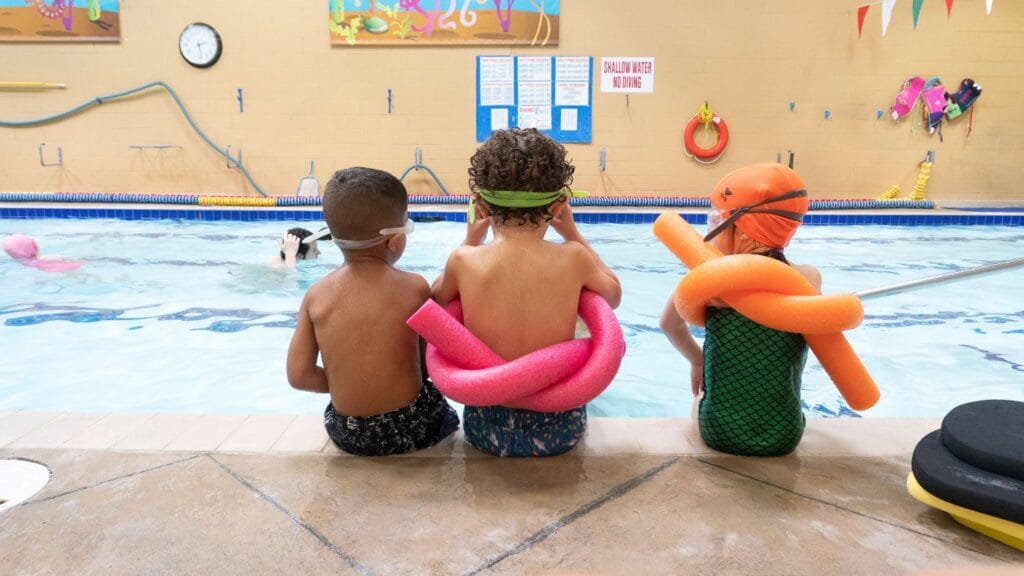
Pool temperature plays a much bigger role in children’s swimming progress than many parents realise. When families look for lessons, they often focus on location, times, and instructor experience. Temperature rarely comes up in conversation. Yet after years of observing childrens swimming lessons across many pools, one pattern stands out clearly. Children learn faster, stay calmer, and build confidence more easily in warmer water. When water is too cold, progress often slows, not because children lack ability, but because their bodies and minds react defensively. This is one reason parents searching for swimming lessons near me often gravitate towards schools like MJG Swim, where the learning environment is designed around how children actually respond to water. You can see their approach at swimming lessons near me.
I write as a swimming blogger who has spent a long time watching lessons rather than selling quick promises. The difference water temperature makes is not subtle. It affects muscle tension, breathing, confidence, and even behaviour. Understanding this helps parents make better choices and set more realistic expectations for progress.
Children experience cold water differently to adults
Adults often underestimate how cold water feels to children. A temperature that feels manageable to an adult can feel uncomfortable or even distressing to a child. Children have smaller bodies, less muscle mass, and a higher surface area relative to their size. This means they lose heat faster.
When a child feels cold, their body reacts automatically. Muscles tighten. Breathing becomes shallow. Movement becomes rushed. These reactions are not choices. They are physical responses.
Swimming requires relaxed muscles and calm breathing. Cold water works against both.
Cold water increases muscle tension
Muscle tension is one of the first responses to cold. Shoulders lift. Arms stiffen. Legs tighten. This tension makes it harder for children to float and harder to move smoothly through the water.
In colder pools, you often see children:
- Hunching their shoulders
- Kicking harder but going nowhere
- Holding their breath
- Rushing to finish tasks
- Clinging to the wall
Parents sometimes read this as poor behaviour or lack of effort. In reality, the child’s body is trying to conserve heat and protect itself.
Warm water allows muscles to relax. Relaxed muscles support better balance, buoyancy, and control.
Breathing becomes harder in cold water
Cold water affects breathing patterns. When children feel cold, they tend to breathe faster and more shallowly. Some hold their breath without realising it. Others gasp when water hits their face.
Calm breathing is central to swimming. It supports floating, timing, and rhythm. When breathing is disrupted, everything else becomes harder.
Warm water helps children breathe more slowly and deeply. This creates a calmer state where learning can take place.
Temperature affects confidence more than technique
Confidence in water is not only emotional. It is physical. A child who feels comfortable in the water is more likely to try new skills. A child who feels cold and tense is more likely to resist.
In colder pools, children often:
- Hesitate before entering the water
- Avoid face immersion
- Ask to get out sooner
- Become quiet or withdrawn
- Lose focus more quickly
In warmer pools, children tend to stay engaged for longer. They explore movement. They attempt floating. They recover more quickly after small mistakes.
Confidence grows faster when the body feels safe.
Warm water supports early learning stages
Early swimming lessons focus on fundamentals. These include water confidence, breathing, floating, and balance. These skills require stillness as much as movement.
Floating, in particular, is difficult in cold water. A tense body sinks more easily. Children then kick harder to stay up, which increases fatigue and frustration.
Warm water supports:
- Easier floating
- Longer practice time
- Calmer face immersion
- Better listening and focus
This is why many teaching pools are kept warmer than leisure pools. The temperature supports learning rather than endurance.
Cold water can mask progress
One of the frustrations parents feel is when progress appears slow. In some cases, the child has the ability but cannot show it because they are fighting the cold.
A child who floats well in a warm pool may struggle in a colder one. A child who breathes calmly in one setting may panic in another. This can confuse parents and lead them to question the teaching.
Understanding the role of temperature helps put progress into context. It is not always about skill. Sometimes it is about comfort.
Behaviour changes often link back to temperature
Children who feel cold may act differently in lessons. They may fidget. They may stop listening. They may rush tasks or ask to leave early.
These behaviours are often misunderstood. They are not signs of disinterest. They are signs of discomfort.
In warmer water, behaviour often improves naturally. Children settle faster. They stay engaged. They respond better to instruction.
This is one reason well structured programmes pay attention to the learning environment as much as the lesson plan.
Pool temperature and sensory sensitivity
Some children are more sensitive to physical sensations. Cold water can feel overwhelming. It can heighten sensory overload, especially in busy pools with noise and echo.
For these children, warm water is not a luxury. It is a necessity for learning. It reduces one source of stress so the child can focus on the task.
Parents of sensory sensitive children often notice a dramatic difference when lessons move to a warmer pool.
Why leisure pools and teaching pools feel different
Many public leisure pools are designed for exercise and general use. Their temperatures are often lower to suit adult swimmers and lap swimming. Teaching pools are designed for learning.
Teaching pools are usually:
- Warmer
- Shallower
- Quieter
- More controlled
These factors combine to create a better learning space for children. Temperature is a key part of that design.
Parents comparing different swim schools should ask about pool temperature. It is a practical detail that makes a real difference.
How temperature affects lesson length and quality
In cold water, lessons often feel rushed. Children tire quickly. Instructors may need to keep activities moving to maintain warmth. This can limit time spent on still skills like floating or breathing.
In warmer water, lessons can slow down. Instructors can take time to correct habits, build confidence, and repeat skills calmly.
This slower pace often leads to faster progress overall.
Why warm water supports better technique later
While warm water is most important for early stages, it also supports later technique development. Children learning strokes need relaxed shoulders, flexible ankles, and controlled breathing.
Cold water increases stiffness. Stiffness leads to poor movement patterns. These patterns can become habits.
Building technique in a warm environment allows children to feel the correct movements more clearly. Once technique is established, children can adapt more easily to different pool temperatures later.
Middle link and practical context
If you want to understand how a structured programme takes factors like pool environment into account, it is worth reviewing MJG Swim’s approach to children’s swimming lessons. From what I have observed, their lesson structure and pool choices support calm learning, especially for younger and less confident swimmers.
This focus on environment is often overlooked, yet it underpins progress more than many parents expect.
Should children only learn in warm pools
Warm pools are ideal for learning, especially in the early stages. That does not mean children will only ever swim in warm water. Once confidence and skills are established, children adapt well to cooler pools.
The key is sequence. Build confidence and technique in a supportive environment first. Then introduce variation later.
This mirrors how many skills are taught. We start in controlled settings before moving to more challenging ones.
What parents can do when choosing lessons
When choosing swimming lessons, parents should consider temperature alongside teaching style and structure.
Useful questions include:
- Is the pool heated for teaching children
- Do younger or beginner swimmers use a warmer pool
- How long are lessons and how is time managed
- Does the environment feel calm or rushed
These questions help parents choose lessons that support learning rather than endurance.
Signs temperature may be affecting your child
Parents may notice signs that temperature is holding their child back:
- Shivering during lessons
- Complaints of feeling cold early on
- Increased tension in shoulders and neck
- Resistance to face immersion
- Loss of focus halfway through lessons
If these signs appear, it may be worth discussing with the swim school or considering a warmer teaching environment.
Temperature works together with good teaching
Warm water alone does not guarantee progress. It works best alongside skilled instruction, clear structure, and patience. The combination creates the right conditions for learning.
When temperature, teaching, and routine align, children tend to thrive.
This alignment is what separates strong programmes from average ones.
Final thoughts and a recommendation
Pool temperature is not a minor detail. It directly affects how children feel, move, and learn in water. Cold water increases tension and slows progress. Warm water supports relaxation, confidence, and steady skill development.
From my observations, MJG Swim understands this balance well. Their focus on calm environments and structured teaching supports real progress for children. If you are based locally and considering swimming lessons in Leeds, you can explore their options at swimming lessons in Leeds. Choosing the right environment early helps children build confidence that lasts, no matter where they swim later on.
