

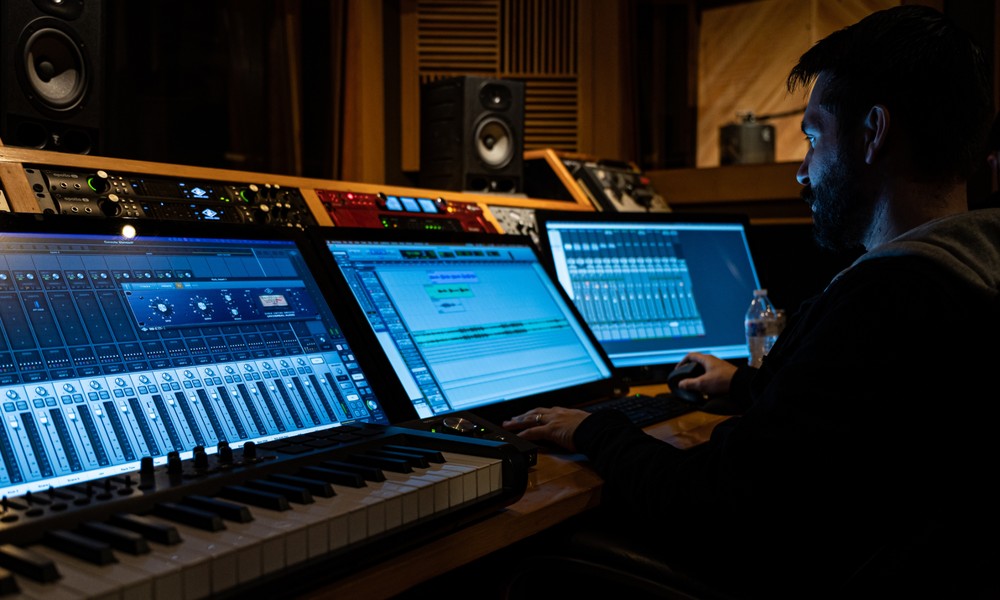
Electronic music production looks deceptively simple from the outside. Open a DAW, drag in some samples, add a beat, and you have a track. But anyone who has tried to make music that actually sounds professional knows how wide the gap is between a rough idea and a finished, release-ready production. That gap is filled by skills specific, learnable, deeply interconnected skills that take time and proper guidance to develop. Enrolling in a dedicated music college for electronic music production gives aspiring producers a structured environment to develop all of these competencies simultaneously, with expert feedback and real studio access accelerating what would otherwise take years of trial and error alone. Here are the seven skills every electronic music producer needs to genuinely master.
1. DAW Proficiency
Your digital audio workstation is your primary instrument. Whether you work in Ableton Live, Logic Pro, Pro Tools, or another platform, deep proficiency in your DAW of choice is non-negotiable. This goes far beyond knowing where the buttons are. True DAW proficiency means understanding signal flow, working fluidly with MIDI and audio, using automation expressively, and navigating your workflow fast enough that the tool never gets between you and the idea.
Most producers settle into surface-level familiarity with their DAW and stop there. The producers who consistently deliver polished work are the ones who have invested the time to understand their platform at a deeper level including its routing architecture, its mixing environment, and the full range of its built-in tools. Start with one DAW and learn it thoroughly before branching out.
2. Sound Design
Sound design is what gives a producer a distinctive sonic identity. It is the difference between using presets that sound like everyone else and building patches, textures, and sounds that are unmistakably yours. At its core, sound design is the art of shaping audio through synthesis, subtractive, additive, FM, wavetable, granular combined with processing tools like filters, modulators, and effects chains.
Producers who can’t design their own sounds are permanently dependent on what others have already created. Producers who can build sounds from scratch have an unlimited palette. Sound design takes significant time to develop, but it is one of the highest-leverage skills in electronic music because it touches every element of a track.
3. Synthesis
Closely related to sound design but distinct enough to warrant its own focus, synthesis is the foundational knowledge that makes sound design possible. Understanding how oscillators, filters, envelopes, and LFOs interact and how different synthesis architectures produce different sonic results is the technical backbone of electronic music production.
A producer who understands synthesis can look at any synthesizer, hardware or software, familiar or unfamiliar, and understand intuitively how to navigate it. That transferable knowledge is enormously valuable in a field where new instruments appear constantly and workflows evolve rapidly.
4. Beat-Making
Rhythm is the engine of electronic music. Beat-making covers the construction of drum patterns, the programming of percussion, the use of groove and swing, and the layering of rhythmic elements into something that feels alive rather than mechanical. It sounds straightforward until you try to make a beat that genuinely moves people.
Strong beat-making involves understanding how different genres approach rhythm differently, how to use silence and space as effectively as sound, and how to build rhythmic tension and release across the arc of a track. It also increasingly involves live performance elements finger drumming, real-time manipulation that require practiced physical skill alongside technical knowledge.
5. Arrangement
Many producers can make a great loop. Far fewer can turn that loop into a fully developed track with a compelling structure, dynamic movement, and a beginning, middle, and end that keeps listeners engaged. Arrangement is the skill that bridges the gap between a promising idea and a finished production.
Good arrangement means understanding how to introduce and develop elements over time, how to build energy toward a drop or climax, how to use breakdowns and transitions effectively, and how to create the sense that a track is going somewhere rather than cycling through the same material indefinitely. It is one of the most underrated and underdeveloped skills among producers at every level.
6. Mixing
A great arrangement mixed poorly sounds amateur. Mixing is the process of balancing, shaping, and positioning every element in a track so that the whole is greater than the sum of its parts. It covers level balance, EQ, compression, stereo placement, reverb and delay, and the management of low-end frequencies that make or break electronic music on a sound system.
Mixing is both technical and creative. There are principles to learn and ears to develop, and neither alone is sufficient. It takes consistent practice across many projects before mixing instincts become reliable.
7. Ear Training
Every skill on this list is developed faster and applied more effectively by a producer with trained ears. Ear training the ability to hear and identify frequencies, intervals, chord qualities, rhythmic relationships, and sonic characteristics is the meta-skill that accelerates everything else.
A producer with trained ears hears immediately when a mix is too muddy in the low-mids. They recognize when a chord progression creates a tension that serves the track and when it works against it. They can listen to a reference track and understand analytically what makes it work. That kind of listening is not passive, it is a skill developed through deliberate practice, and it pays dividends across every other area of production.
None of these seven skills exists in isolation. DAW proficiency shapes how efficiently you apply mixing techniques. Synthesis knowledge powers sound design. Ear training accelerates all of it. The producers who develop these competencies together rather than obsessing over one while ignoring the others are the ones who build careers rather than just tracks.
